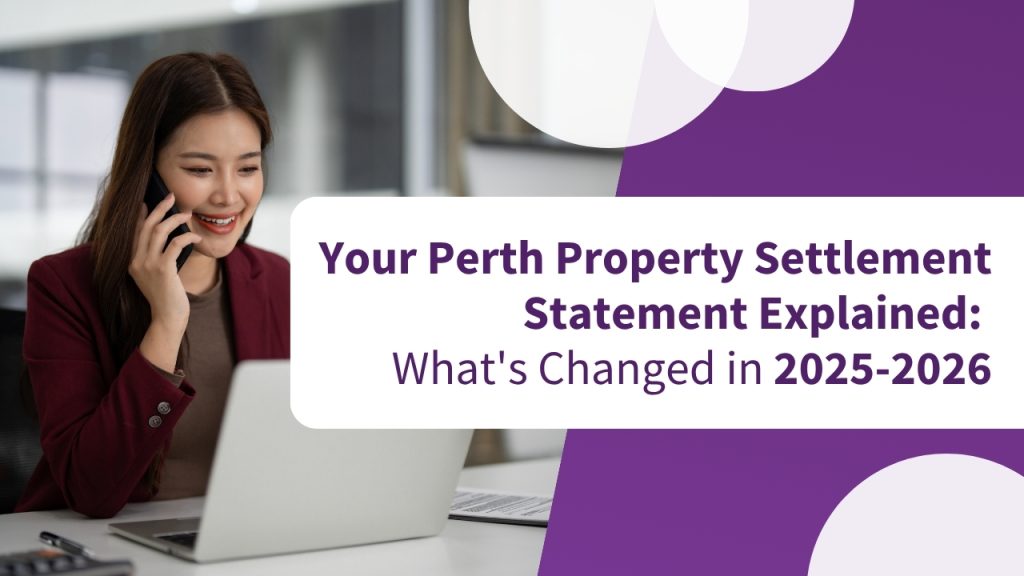
Your Perth Property Settlement Statement Explained: What Every Line Means and What’s Changed in 2025-2026
A property settlement statement is a detailed financial document that itemises and adjusts the costs, charges, and entitlements between a seller and purchaser at the time of settlement. Prepared by a conveyancer, it can also help you organise your finances and contribute to a smooth property settlement. At KDD Conveyancing, as part of our property settlement services, we prepare your settlement statement with great care and detail to ensure the figures are correct and compliant. We also ensure your settlement takes into account any new and important government changes, such as any concessions you are eligible for or mandatory payments you need to make.
Why your settlement statement looks different from your initial estimate
When a conveyancer first calculates initial figures for the settlement statement, these are just projected estimates. The final figures depend on the actual settlement date on which property expenses are fairly divided between the buyer and seller.
The buyer is responsible for property expenses from the adjustment date, while the seller is responsible for expenses up to and including the day before the adjustment date.
Adjustments are calculated as at the settlement date and account for amounts already paid by either party. Where the seller has prepaid rates or other outgoings beyond settlement, the buyer reimburses the relevant portion. Where amounts are in arrears, the seller’s proceeds are reduced accordingly. The conveyancer confirms these figures by the records they gather and inspect, such as rate notices. Once the conveyancer has checked payments made and those still outstanding for each party, they will prepare the final property settlement statement. The buyer’s conveyancer usually sends the statement to the seller’s conveyancer to check and approve.
The PEXA digital platform service that KDD Conveyancing uses also helps streamline and expedite the process by enabling adjustments and balances to be uploaded and checked before settlement day.
Transfer duty (Stamp Duty): how it’s calculated and when it’s paid
Transfer duty, commonly referred to as stamp duty, is a state government tax applied to dutiable transactions, such as property purchases, and is usually one of the largest expenses for this type of transaction. As the WA Government’s Treasury Department outlines, it is typically paid at or before settlement.
Duty is determined by applying the relevant rate to the dutiable value of the transaction. The cost depends on the property purchase price, whether you are a first home buyer, and if it’s a primary residence or investment property.
A general rate of duty applies to all dutiable transactions. A concessional duty rate applies to properties with a dutiable value not exceeding $200,000. This is a separate concession to the first home owner duty concession introduced in 2025, and your conveyancer can confirm current thresholds and which rate applies to your transaction.
A first home owner rate of duty also applies to eligible first home buyers. Eligibility for this rate is assessed separately from the First Home Owner Grant, and you may qualify for one without qualifying for the other. Your conveyancer can confirm which concessions apply to your purchase. The WA government’s online calculator can help estimate this amount.
In June 2025, the government announced the first home owner duty concession, which meant that about 8,000 buyers are no longer paying any transfer duty when buying their first home or vacant land to build their first home. These changes include no duty payable on homes valued up to $500,000.
Landgate title registration fees: what changed in July 2025
When transferring the title of your property from the previous owner into your name, a transfer registration fee applies. Effective from 1 July 2025, Landgate increased its regulated land titling fees by approximately 3% and valuation services fees by approximately 2.75%.
Rate and water adjustments: what you’re paying for and what you’re getting back
Council rates are levied annually by the local government, while Water Corporation charges are billed quarterly. Both are apportioned between the buyer and seller as at the adjustment date so that each party pays only their share.
Settlement agent fees and disbursements: what each line covers
In Western Australia, settlement agent fees are not regulated, and the amount depends on the property value and the type of transaction. However, settlement agents are required by law to provide clients with a written cost disclosure before commencing work, so you should always have a clear fee estimate upfront.
The fee comprises:
- Professional service fee: for conducting the settlement
- Administration and disbursement costs, which may include postage, courier costs, and other incidental expenses incurred in conducting the settlement
- Statutory charges: Government and other third-party costs are itemised and are the same no matter which settlement agent you use. Such charges include registration fees, transfer duty, Landgate title search, and PEXA platform fees
How to read your statement before you’re asked to confirm the figures
When reading your settlement statement, check that the following items are correct:
- Purchase price, deposit, and loan amounts
- Adjustments for water and council rates.
- Disbursement fees: These include government fees such as transfer duty, title searches, and registration fees. Verify the settlement agent fees to ensure they are as per the written cost disclosure set at the beginning. Separate and additional charges include those from banks or commissions from real estate agents or other third parties.
If you believe there is an error, it is best to raise it with your conveyancer promptly. Most discrepancies can be resolved between the parties’ conveyancers before settlement. Where a dispute cannot be resolved, you may wish to seek independent legal advice.
Still need professional property settlement services in Perth?
As well as balancing the costs of a property purchase between a buyer and seller, a settlement statement also ensures transparency and trust and is a record of the property transaction for both parties.
An accurate, comprehensive, and clear settlement statement can help avoid mistakes, prevent disputes, ensure fair financial balancing of costs, and protect both parties’ interests on settlement day.
Thorough checking of all documentation is equally important, as even minor errors can cause costly delays on settlement day.
KDD Conveyancing meticulously compares each item on the statement with relevant documentation such as certificates and contracts to ensure accuracy for a stress-free property settlement. Get in touch so we can help you understand and prepare your settlement statement as part of your property settlement.